Smart contract core
What Makes a Good Smart Contract Blockchain Example?
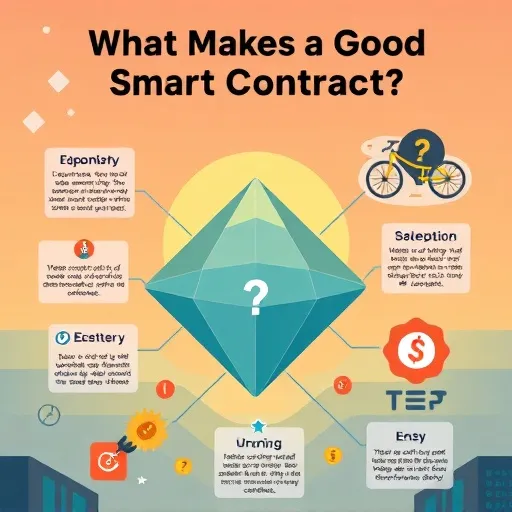
Not every piece of code deployed to a chain deserves to be called a great smart contract blockchain example. Before diving into specific patterns, it helps to set some ground rules. A truly useful smart contract blockchain example should demonstrate three core things: deterministic logic (the contract behaves identically for every caller, every single time), real utility (it solves a problem people genuinely care about, not just a flashy technical demo), and a clear trust boundary (you can see exactly what the code controls and what it doesn't). Those three pillars keep showing up across every worthwhile smart contract blockchain example you'll encounter, so keep them front of mind as we explore the patterns below.
Escrow Logic and Conditional Release as a Foundational Smart Contract Blockchain Example
The escrow contract is basically the "hello world" of decentralized agreements, and it remains one of the most instructive smart contract blockchain example designs for newcomers. Here's the gist: two parties agree to a transaction, and a neutral contract holds the funds until predefined conditions are met. The buyer deposits funds into the contract, which locks them and emits an event. The seller delivers the goods or service and marks the milestone complete. The buyer confirms receipt, and the contract releases funds to the seller. If a dispute pops up, a pre-agreed arbiter address can resolve the outcome.
What makes this smart contract blockchain example so valuable is that it demonstrates state management and conditional release — two concepts you'll reuse in nearly every contract you ever write. It also shows how a smart contract slashes counterparty risk without needing a trusted intermediary to physically babysit the money.
Token Vesting Schedules and Time-Based Logic in a Smart Contract Blockchain Example
Another classic smart contract blockchain example is a fungible token with a built-in vesting schedule. Instead of dumping all tokens on a team at once, the contract releases them gradually over time. This pattern is everywhere in 2026 because it aligns incentives and reduces the risk of sudden sell pressure. Key mechanics include a cliff period (no tokens unlock until a certain date), linear release (after the cliff, tokens unlock proportionally each block or day), a beneficiary mapping (each address has its own schedule stored on-chain), and a claim function (beneficiaries call a function to withdraw whatever has vested so far).
This is a fantastic teaching smart contract blockchain example because it combines time-based logic, mapping data structures, and pull-based withdrawals — where users claim rather than the contract pushing funds out. That pull pattern is a security best practice worth internalizing early in your development journey.
Decentralized Voting Mechanisms and Governance as a Smart Contract Blockchain Example
Voting contracts are another staple, frequently used as a smart contract blockchain example in governance tutorials. The goal is simple: let token holders or members cast votes on proposals, tally them transparently, and execute outcomes automatically. A proposal is created with a description and voting window. Eligible addresses cast votes weighted by their stake or membership status. The contract tallies results at the deadline, and if quorum is met and the proposal passes, a follow-up action executes.
What's interesting about this smart contract blockchain example is that voting contracts surface some of the hardest design questions in the space: how do you prevent double voting? How do you handle delegation? How do you keep gas costs reasonable as participation grows? These questions separate a toy smart contract blockchain example from a production-ready one.
Automated Royalty Splitters and Payment Distribution in a Smart Contract Blockchain Example
Here's a modern, practical smart contract blockchain example gaining traction in 2026: a contract that automatically splits incoming payments among multiple contributors based on preset percentages. Creators, collaborators, and rights holders each register their share, and the contract distributes funds the moment they arrive. The transparency is unbeatable — every split is visible and auditable on-chain. Automation means no manual invoicing or reconciliation. And composability lets the splitter plug into other contracts, marketplaces, or payment rails.
This is a killer smart contract blockchain example for anyone in the creator economy or collaborative business space, because it shows how a relatively small piece of logic can wipe out an entire category of administrative overhead.
Supply Chain Provenance Tracking and Role-Based Permissions in a Smart Contract Blockchain Example
On the enterprise side, provenance tracking is one of the most cited smart contract blockchain examples. Each stage of a product's journey — raw material, manufacturing, shipping, retail — writes an event to the contract. Because the ledger is append-only, the resulting history is tamper-evident. The contract registers a unique identifier for each batch or item, records custody transfers between authorized parties, enforces role-based permissions so only approved addresses can update status, and exposes a read function so downstream buyers can verify origin and handling.
This smart contract blockchain example is powerful because it highlights how smart contracts function as a shared source of truth across organizations that don't fully trust each other — a fundamentally different value proposition than the purely financial examples above.
Evaluating Any Smart Contract Blockchain Example Through Access Control and Reentrancy Safety
Once you've seen a handful of examples, patterns emerge. Here's a quick checklist for reviewing any smart contract blockchain example, whether it's yours or someone else's: access control (who can call which functions, and are those permissions enforced?), reentrancy safety (are external calls made after state changes are finalized?), upgradability (is the contract immutable, or does it use a proxy pattern?), gas efficiency (are storage writes minimized and loops bounded?), and test coverage (are edge cases like zero values, expired deadlines, and unauthorized callers tested?). Running any smart contract blockchain example through these five lenses quickly tells you whether it's production-grade or just illustrative.
Common Pitfalls in Smart Contract Blockchain Example Designs and How to Dodge Them
Even experienced teams stumble on recurring issues. Unbounded loops can brick a function once an array exceeds the block gas limit. Oracle trust assumptions mean that if a contract relies on external data, that data feed becomes part of the attack surface. Integer handling — overflow and precision issues — still bites teams that skip safe math libraries. Front-running exposure lets observers of the mempool exploit functions with predictable outcomes. And missing events create blind spots for off-chain systems that track state. None of these are exotic — they're the bread-and-butter concerns that separate a working prototype from a resilient deployment.
Choosing the Right Smart Contract Blockchain Example for Your Use Case and Stakeholders
Here's the thing: there's no single "best" smart contract blockchain example. The right one depends on what you're building. Financial applications benefit from escrow and vesting patterns. Multi-stakeholder projects fit royalty splitters and voting mechanisms. And if you're bridging physical and digital worlds, provenance tracking is the template to study. My advice: start with the simplest smart contract blockchain example that captures your core logic, get it working end-to-end on a test network, then layer in complexity. Too many teams try to design a perfect, all-encompassing contract from day one and end up with something hard to audit and harder to maintain. Pick your favorite pattern, fire up your development environment, and start building — the tools in 2026 are better than they've ever been.