Smart contract compa
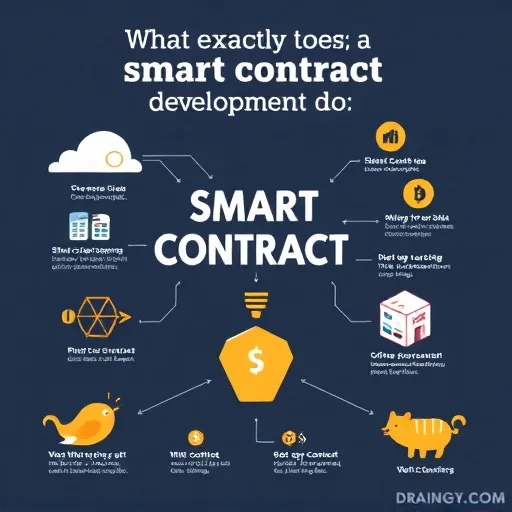
What Exactly Does a Smart Contract Development Company Do?
So you've heard the term thrown around, but what does a smart contract development company actually do all day? Let's break it down without the buzzword soup. At its core, a smart contract development company is a specialized firm that designs, writes, tests, audits, and deploys self-executing contracts on blockchain networks. These contracts are just code—but special code that automatically enforces the terms of an agreement once certain conditions are met. No middleman, no paperwork, no waiting around for someone to approve a transfer. Pretty cool, right?
But here's the thing: a good smart contract development company does way more than just crank out lines of code. A full-service provider typically rolls out the whole red carpet:
- Blockchain consulting — helping you figure out which network (Ethereum, Solana, Polygon, or even a private chain) actually fits your use case
- Custom smart contract development — building contracts tailored to your specific business logic
- Token creation and management — from utility tokens to security tokens and NFTs
- Decentralized application (dApp) development — the front-end and back-end that sit on top of your contracts
- Security auditing — finding vulnerabilities before hackers do
- Gas optimization — reducing transaction costs so your users don't bleed money
- Post-deployment maintenance — because smart contracts aren't "set and forget"
- Compliance and regulatory support — increasingly critical in 2026 as global regulations have matured
In short, a smart contract development company is your end-to-end partner for anything touching on-chain logic. The best ones operate like an extension of your own team, not some distant vendor you email once a month.
Why Building Smart Contracts In-House Is Riskier Than It Looks in 2026
I get it. Every tech lead thinks their internal team can handle it. And sure, writing a "Hello World" smart contract is a piece of cake. But here's where things get messy.
Smart contracts are immutable once deployed. That means if there's a bug, you can't just push a patch like you would with a normal app. You either need an upgradeable proxy pattern (which adds a ton of complexity), or you're stuck with a broken contract that could drain millions in user funds. This is exactly why smart contract security has become such a massive deal in 2026.
Recent years have shown us over and over that poorly written contracts lead to catastrophic losses. Reentrancy attacks, integer overflow bugs, oracle manipulation, flash loan exploits—the list of vulnerabilities is long and growing. A professional smart contract development company employs security researchers, formal verification tools, and auditors who've seen these attack vectors countless times.
Beyond security, there's efficiency. An experienced blockchain development team knows how to write code that minimizes gas fees, saving your users serious money over time. They also understand the nuances of different virtual machines and consensus mechanisms—stuff that takes years to master.
Decoding the LSI Landscape: dApps, DeFi, and Cross-Chain Interoperability
When you're researching smart contract development services, you'll run into a mountain of jargon. Let's decode the most important terms.
Decentralized application development (dApp development) is a big one. Smart contracts are the engine; dApps are the car. A dApp is a user-facing application that interacts with smart contracts on the backend. If you're building a DeFi protocol, an NFT marketplace, or a blockchain-based game, you're building a dApp. Look for a smart contract development company with strong full-stack capabilities—because a great contract with a clunky interface won't win users.
Blockchain consulting services matter too. Before you hire anyone to write code, you need strategic advice. Does your use case actually need a blockchain? Which chain should you deploy on? What's your tokenomics model? Reputable firms offer blockchain consulting as a first step, ensuring you're not pouring money into a misguided project.
Token development is a specialized skill. Whether you're issuing a fungible token, a non-fungible token, or a hybrid model, the standard you choose (ERC-20, ERC-721, ERC-1155, or their equivalents on other chains) matters enormously.
Smart contract auditing? Never—and I mean never—deploy a contract without an independent audit. Even if your development team is brilliant, a second set of eyes is essential. Many top-tier smart contract development companies offer auditing as a standalone service or bundle it into their packages.
DeFi development remains the biggest use case for smart contracts in 2026. Lending protocols, automated market makers, yield aggregators, staking platforms—all rely on complex, interdependent smart contract systems. DeFi development requires a deep understanding of economic incentives, not just code.
Web3 development is the broader vision of a decentralized internet, and smart contracts are a foundational piece of it. A smart contract development company that also offers Web3 development services can help you integrate wallets, decentralized identity, and on-chain data into your product strategy.
Cross-chain interoperability is huge in 2026. No single chain dominates anymore. Users expect their assets and data to move seamlessly between networks. Cross-chain bridges and interoperability protocols have become a major focus area, and your development partner should have experience with multi-chain deployments.
Layer 2 solutions have matured dramatically. If your application needs high throughput and low fees, your smart contract development company should know how to deploy on or integrate with Layer 2 networks.
How to Evaluate a Smart Contract Development Company Without Getting Burned
Alright, so you're convinced you need to hire a professional firm. How do you separate the truly great ones from the pretenders? Here's a practical checklist.
Check their portfolio—but dig deeper than the website. Any company can list impressive-sounding projects on their homepage. What you want is verifiable on-chain activity. Ask for contract addresses. Look them up on a block explorer. Check how much value has flowed through those contracts and whether they've been audited.
Review their security practices. Ask specifically about their development lifecycle. Do they use test-driven development? Do they run static analysis tools? Do they conduct peer reviews before deployment? A serious smart contract development company will have a documented security process and won't hesitate to share it.
Look at their audit partners. Even if the company does internal audits, they should also work with independent third-party auditors. Ask which firms they've partnered with and whether those audits are publicly available.
Assess their communication style. This one's underrated. Blockchain projects are complex, and you'll be working with your development partner for months. If they can't explain technical concepts in plain language, or if they're evasive about timelines and costs, that's a problem.
Ask about post-deployment support. What happens after your contract goes live? Does the company offer ongoing monitoring, bug bounties, or upgrade services? In 2026, smart contract maintenance is a continuous process, not a one-time deliverable.
Verify their team's credentials. Who's actually writing the code? Look for developers with public GitHub contributions, conference talks, or published research in the blockchain space. A firm staffed by hobbyists won't cut it for production-grade contracts.
Understand their pricing model. Pricing varies wildly. Some companies charge fixed project fees, others bill hourly, and some work on retainer. Be wary of quotes that seem too low—they usually signal cutting corners on testing or security.
Common Red Flags When Hiring a Smart Contract Development Company
Over the years, plenty of businesses have gotten burned by less-than-reputable development firms. Here are the warning signs:
- No verifiable past projects — If they can't show you real contracts they've deployed, walk away.
- Guarantees of "100% security" — Nobody can guarantee that. Security is about risk reduction, not elimination.
- Refusal to provide a detailed scope of work — Vague proposals lead to scope creep and blown budgets.
- No mention of audits — This is a massive red flag. Auditing should be baked into the process.
- Pressure to sign quickly — Legitimate companies give you time to do due diligence.
- One-size-fits-all solutions — Every blockchain project is different. Cookie-cutter contracts are a recipe for disaster.
- No post-launch support plan — Smart contracts need ongoing care, especially if they handle significant value.
What's Changed in 2026 for the Smart Contract Development Company Landscape?
The smart contract landscape has evolved dramatically, and 2026 brings its own set of trends and expectations.
AI-assisted development is now deeply integrated into the smart contract development workflow. These tools help with code generation, vulnerability detection, and even economic modeling. The best development companies leverage AI to ship faster and safer—but they still rely on human expertise for critical decisions.
Regulatory clarity has finally arrived in many jurisdictions. After years of uncertainty, clearer frameworks for blockchain-based applications now exist. Smart contract development companies that understand these regulations—and can build compliant contracts—have a significant edge.
Account abstraction has gone mainstream, making user experiences smoother and more secure. If your development partner isn't up to speed on this, they're falling behind.
Zero-knowledge proofs have moved from niche to mainstream, enabling privacy-preserving transactions and scalable rollups. Contracts that leverage ZK proofs are increasingly common, especially in identity and finance applications.
Sustainability concerns matter more than ever. Development companies are optimizing contracts for lower computational overhead, and many clients now prioritize eco-friendly blockchain networks.
Questions You Should Always Ask a Potential Smart Contract Development Company
Before you sign anything, make sure you get clear answers to these questions:
- Which blockchain networks do you have the most experience with?
- Can you walk me through your development and testing process?
- Who will be my main point of contact, and how often will we communicate?
- Do you conduct internal audits, and do you work with external auditors?
- How do you handle upgrades or bug fixes after deployment?
- What's your estimate for gas costs, and how do you optimize for them?
- Can you provide references from past clients?
- How do you stay current with emerging security threats?
- What's your policy on intellectual property and code ownership?
- What happens if something goes wrong after launch?
The answers will tell you a lot about a company's maturity, transparency, and reliability. A smart contract development company worth its salt will welcome these questions—not dodge them.
Choosing the right smart contract development company is one of the most important decisions you'll make for your blockchain project. The technology is powerful but unforgiving—mistakes are expensive and often irreversible. In 2026, the bar has been raised. Users expect seamless experiences, regulators expect compliance, and attackers are more sophisticated than ever. A great smart contract development company doesn't just write code—they act as strategic advisors, security guardians, and long-term partners in your success. So do your homework, ask the tough questions, and verify everything. Whether you're building the next big DeFi protocol, launching a tokenized marketplace, or exploring blockchain for enterprise use cases, take the time to find a smart contract development company that truly understands your vision—and has the technical chops to bring it to life.